
A commonly used and very important standard is IEEE 519-2022 (previous versions IEEE 519-1992 and IEEE 519-2014). The standard, among other things, puts two requirements on harmonics; and absolute maximum THDU level, and a variable maximum TDD level. All limits are applied to the Point of Common Coupling (PCC), which is the interface between utility (sometimes called operator) and consumer. The PCC can be located at any voltage level. In some cases, the PCC is considered to be an internal point in a system of particular interest; this is not in line with the original intention of the IEEE 519, which considered only the connection point between operator and user (consumer).
The distortion is caused by NON-LINEAR loads such as Variable Frequency Drives, Power Supplies, LED Lighting, etc..
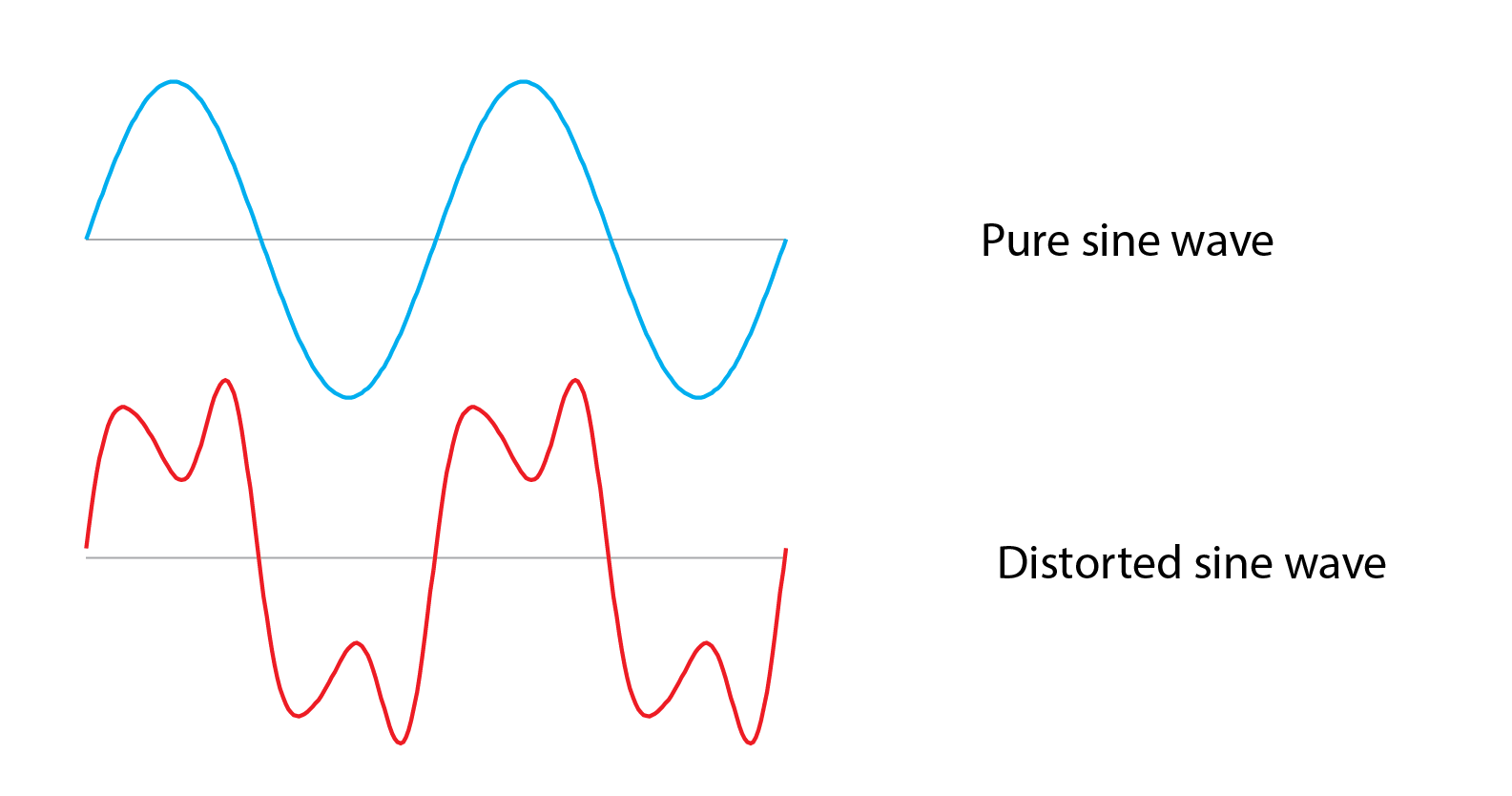
The distorted waveform can cause damage to critical equipment by overheating
Current Harmonic Limits;
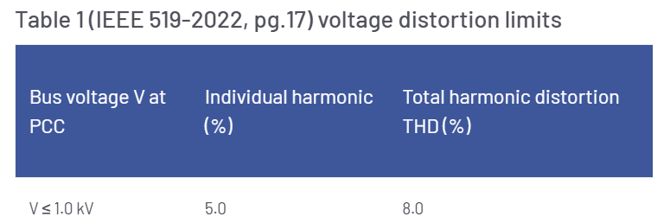
When using VFD's, there are four products that can assist in meeting IEEE-519;

1.) Line Reactors - Will lower the harmonics but will not meet IEEE-519 standards
2.) Passive Filters - Will meet the IEEE-519 standard
3.) Active Filters - Will meet the IEEE-519 standard
4.) AFE (Active Front End) VFD's - Will meet the IEEE-519 standard